

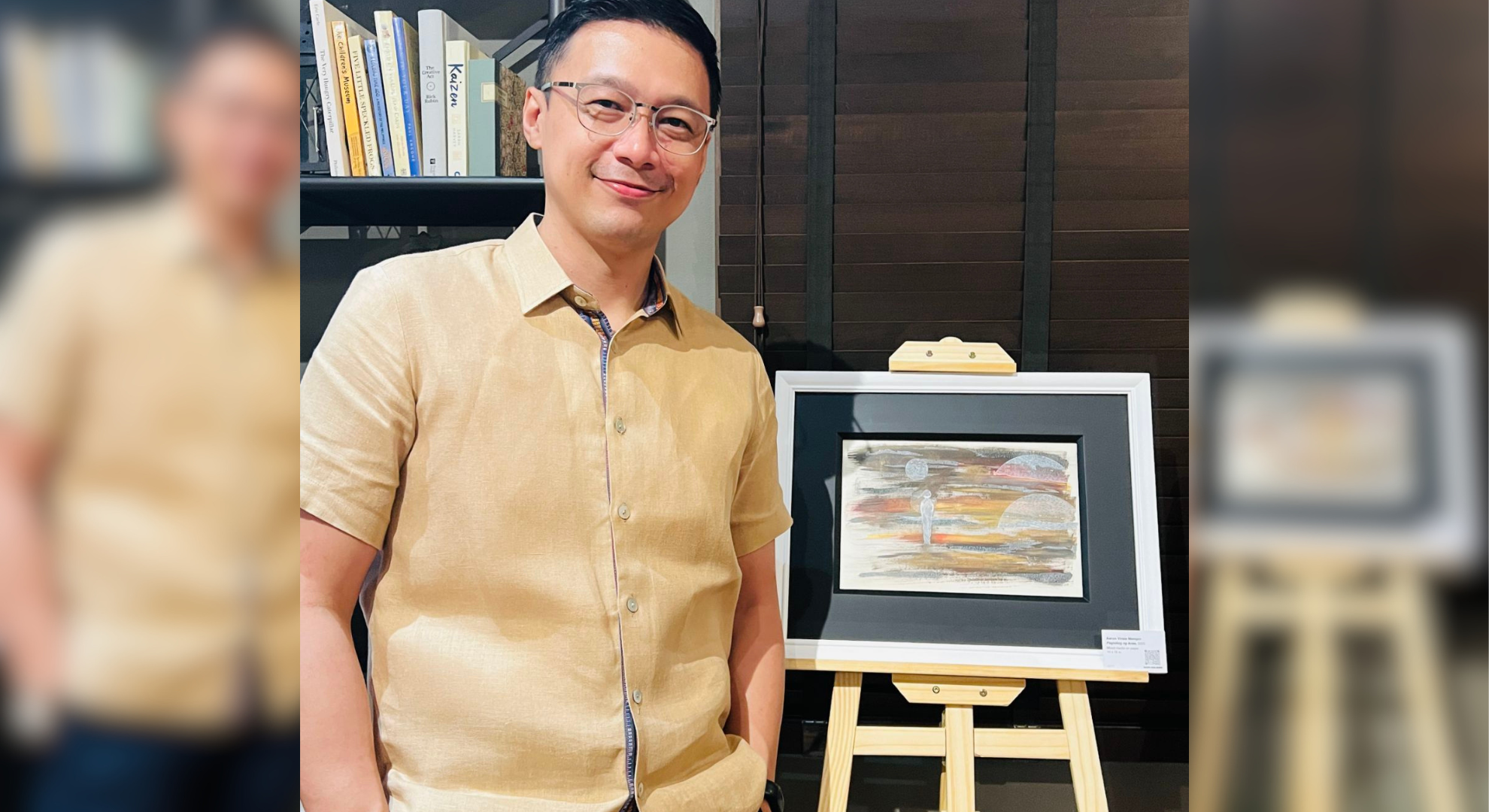

There are contemporary artists who arrive fully formed from the halls of art school, armed with theory and lineage. And then there is Aaron Virata Mempin who arrived from the corporate boardroom. Before the canvases, before the collaborations, before the quiet confidence of his geometric lines, there were two decades in marketing, brand strategy, business management, numbers, systems, and structure. It’s tempting to frame his pivot to full-time art as a leap of faith. It was architecture.
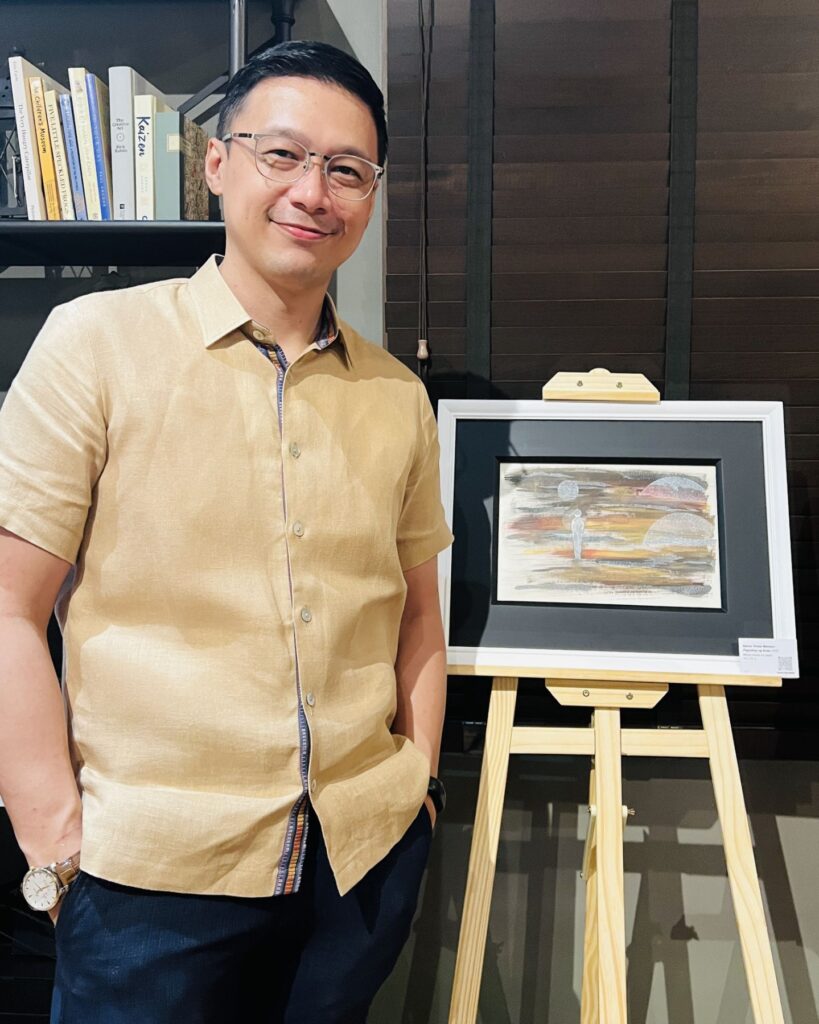
Virata Mempin doesn’t see business and art as separate worlds because the truth is, Marketing taught him that passion needs structure to survive. In other words, art needs a backbone. Thus, while many artists resist the language of business, Virata Mempin speaks it fluently. He understands and embraces inventory, managing production, tracking reach, and growth. These are not afterthoughts in his studio; they are part of the practice. He treats his art not as a hobby elevated, but as an enterprise designed to endure. For him, numbers don’t limit creativity, they protect it. Because when the foundation is stable, experimentation becomes possible. Sustainability, for him, is not a compromise. It’s freedom. That corporate muscle memory gives him an edge.
The Discipline Behind the Minimalism
Not emerging from a traditional art-school pipeline, Virata Mempin’s appreciation for art matured through brand development, through observing how visuals shape perception and narrative. His creative awakening was supported by family and friends, especially his wife, through her arts management initiative and creative social enterprise, Katha Pilipinas. Founded in 2016 by arts manager and cultural advocate Daianne Moreno-Mempin, the organization champions Filipino artists and artisans while fostering community impact, creative leadership, and sustainable livelihoods through the arts.
Virata Mempin doesn’t see art as a solo pursuit. He sees it as shared authorship. In fact, he has proudly worked alongside established Filipino artists like Dominic Rubio, Ronna Manansala, and Quiccs Maiquez, and has engaged in dialogue with international artists such as Jarl Cotterink, Tendai Kamwendo, and Huw Richards Evans. These collaborations have affirmed that his geometric language could stand confidently in conversation. “We’re better when we create together,” he says simply.
Spend time with Virata Mempin’s work and you’ll notice what’s missing before you notice what’s there. No excess. No dramatic spectacle. No frantic gestures. Just lines, deliberate, restrained, almost meditative. His language is geometric abstraction done in acrylic and mixed media become vehicles for structure, balance, and space. The compositions feel quiet, but never empty because in a world that rewards spectacle, subtlety feels more honest.
Restraint, for Virata Mempin, is not limitation. It’s power. It’s knowing when to stop so the viewer can breathe. It’s trusting that simplicity can carry emotional weight. If there is “chaos” in his work, it is organized, contained within grids and guided by invisible logic. You sense the marketer in him still: clarity matters. Precision matters. Intention matters.
A recurring presence in Virata Mempin’s work is the horizon, that steady line separating sky and sea, something that’s both literal and metaphorical. It comes as no surprise because he finds grounding near the water, watching the coastline where movement meets permanence. The Philippine seas offer him a visual rhythm: fluid yet anchored. That balance mirrors his own trajectory. Motion guided by structure. Expansion held by discipline.
The Artist as Bridge-Builder
Virata Mempin’s involvement in civic organizations, including the Rotary Club of Makati, extends that philosophy beyond gallery walls. He believes the contemporary artist must function as a bridge, translating complex social emotions into visual forms people can gather around. Art, in this context, becomes advocacy. A canvas can fundraise. A collaboration can empower. A line can carry hope. Exhibitions like Ugnay in 2025—his collaboration with Rubio through the Rotary Club of Makati—reinforced his belief that art can strengthen social bonds when created collectively.
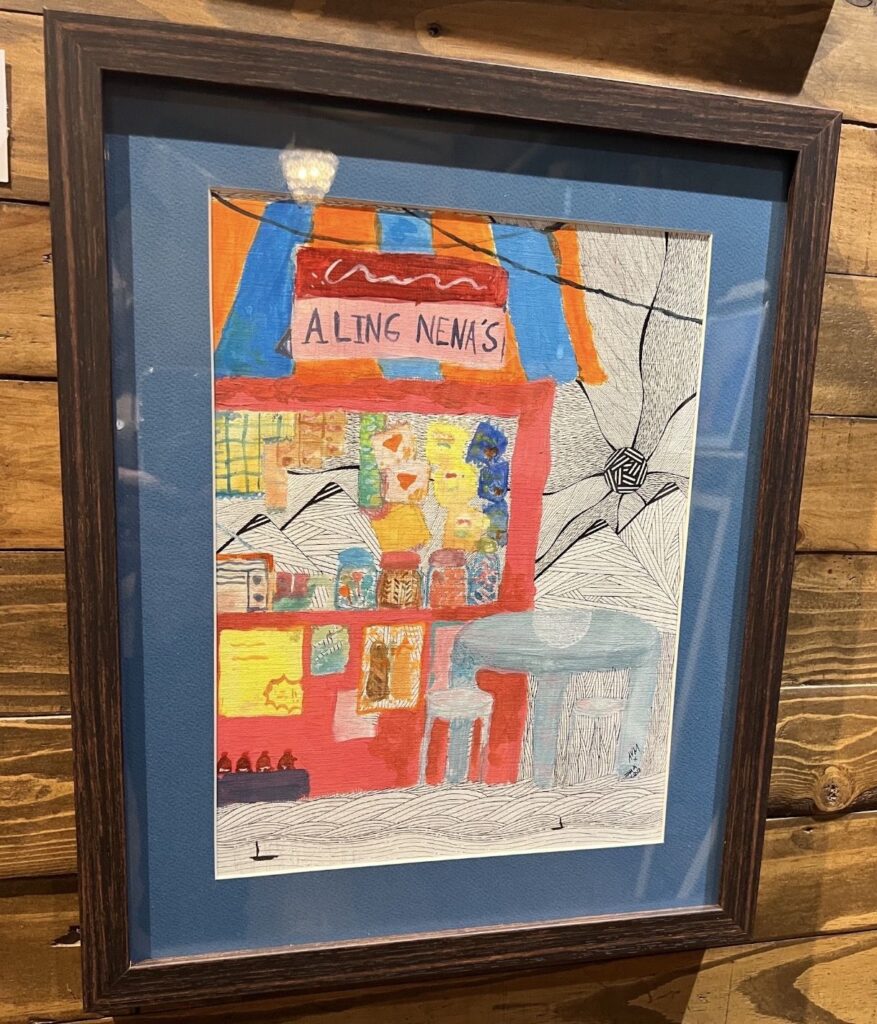
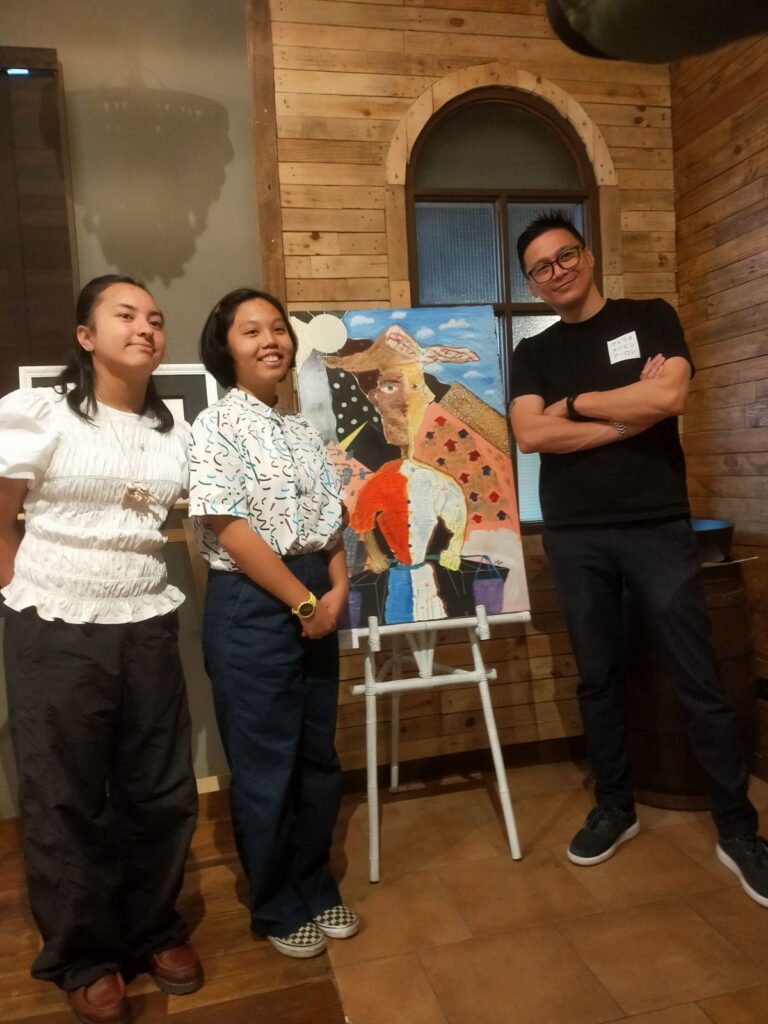
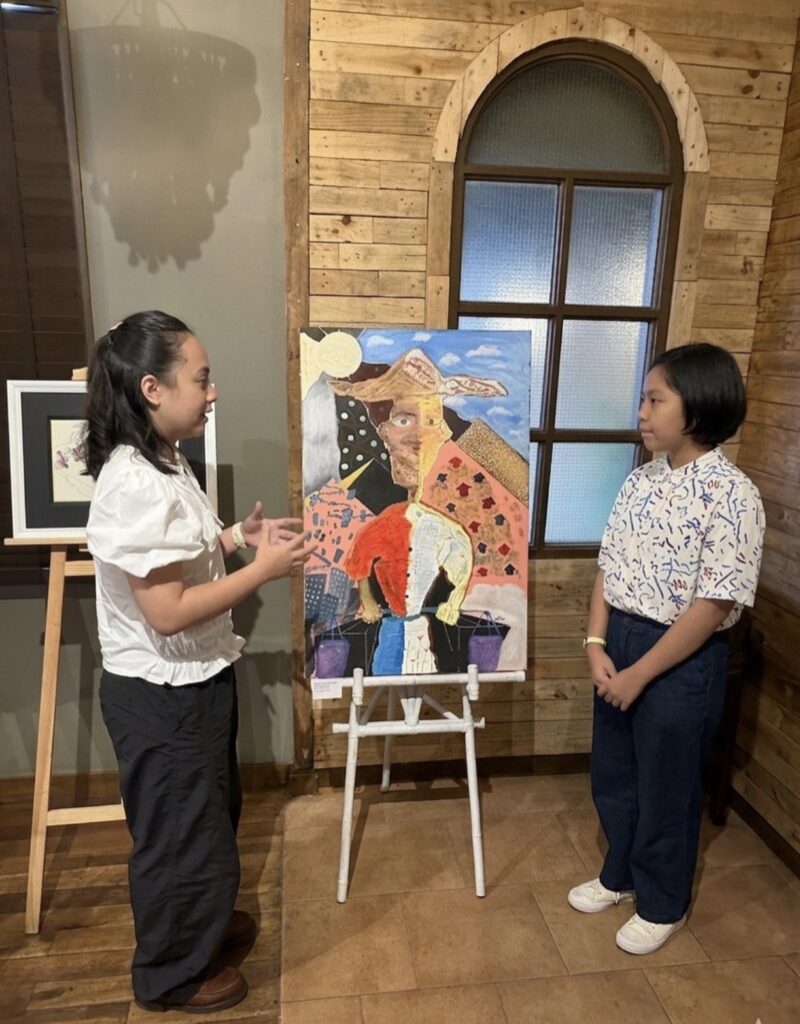
Currently on view at Navitas Haus until March 28, 2026, Bridges features his works alongside teenage artists Zaha Cruz and Nikolai Quiambao. The Navitas Learning Haus, a repurposed 1970s home in the old Poblacion district, now serves as a community-oriented learning space founded by educator Elo Coronel-Quiambao to reimagine education beyond traditional classrooms. For Virata Mempin, working with young artists allows him to share both platform and experience thus, a sequel of Bridges will be staged in July, this time in bigger scale to accommodate more young artists to join the show.
True to the exhibition’s title, he sees artists as bridge-builders capable of translating complex social emotions into visual forms that spark conversation. He described the collaboration as invigorating, blending his geometric lines with Cruz’s vibrant depictions of everyday Filipino life and Quiambao’s reinterpretation of classical imagery.
A Calendar of Creative Collaborations
With multiple exhibitions scheduled throughout 2026, the year promises to be especially jampacked. Following Bridges, he will mount a joint exhibition with painter and sculptor Ronna Manansala at Altro Mondo Creative Space in Makati. In April, he will collaborate with sneaker customization artist Jeff Cordova of JAAM Customs at Easter Coffee Club in Antipolo, merging fine art with bespoke footwear design. May will see a partnership with jewelry designer Mitzi Parungao of Mitzi Jewels, exploring the intersection of visual art and fine jewelry in collaboration with the Rotary Club of Makati.
Additional projects include renewed collaborations with Dominic Rubio and participation in the Ateneo de Manila University Lux in Altum exhibition alongside artists Ricky Francisco, Lala Tuazon, and Hazel Imperian-Tan. To say collaboration influences his work would be an understatement—it is the heart and soul of his creative practice. Working with others pushes him beyond familiarity, keeping his art dynamic rather than repetitive. Beneath these shared efforts lies a central theme: connection. Whether between lines on a canvas or between creators themselves, each piece explores how distinct elements can coexist and belong together. He advocates “shared authorship” as a way to strengthen the broader Philippine creative economy, believing that when artists, designers, and artisans collaborate, the entire sector benefits. Because for Virata Mempin, art doesn’t belong exclusively on canvas, each collaboration mentioned advances a single idea: when creative industries intersect, the entire ecosystem rises.
Redefining Success
Five to 10 years from now, Virata Mempin sees his work evolving into large-scale public installations and more local and global collaborations that represent modern Filipino creativity, without feeling pressured to use traditional symbols because his being Filipino is already depicted in the rhythm of his works, inspired by the Philippine seas and the Bayanihan spirit (communal unity). “I envision moving into more three-dimensional spaces, perhaps exploring how my geometric lines can exist in sculpture or functional design,” he said. Ultimately, he simply wants to be known as an artist who helped expand the definition of what Filipino Geometric Abstraction can be.
He also visualizes himself representing the Philippines in more major global art stages, showcasing a practice that is uniquely collaborative. “I want to be an ambassador for the Filipino spirit of connection through geometric abstract art,” he beamed. But at the moment, he is more than pleasantly satisfied with his present and future collaborations, knowing that whatever he pursues, he has his family and responsibilities in civic service to keep him grounded. After all, he constantly reminds himself that while art is a part of life, human connection is always the heart of it.
Ask him what success looks like and he doesn’t mention sales or solo shows. Success, for him, is legacy. “If my work facilitates meaningful exchanges between people, then I’ve succeeded,” he concluded.
Virata Mempin does not paint for spectacle; he paints for structure. He paints connection, the quiet assurance that even within abstraction, every element can find where it belongs. Through collaboration, he reveals that the most compelling masterpieces are not created alone, but together. And perhaps, in today’s world, that is the most radical statement of all.
To know more about Filipino geometric abstract artist Aaron Virata Mempin, his masterpieces and future collaborations, follow or contact him via his Socials—IG: @aaron.virata.mempin / FB: Aaron Virata Mempin – Artist / Tiktok: @aaronviratamempin / YT: @aaron.virata.mempin / X: aaronviratamemp or email him at avmsartworks@gmail.com.







Leave a Reply