




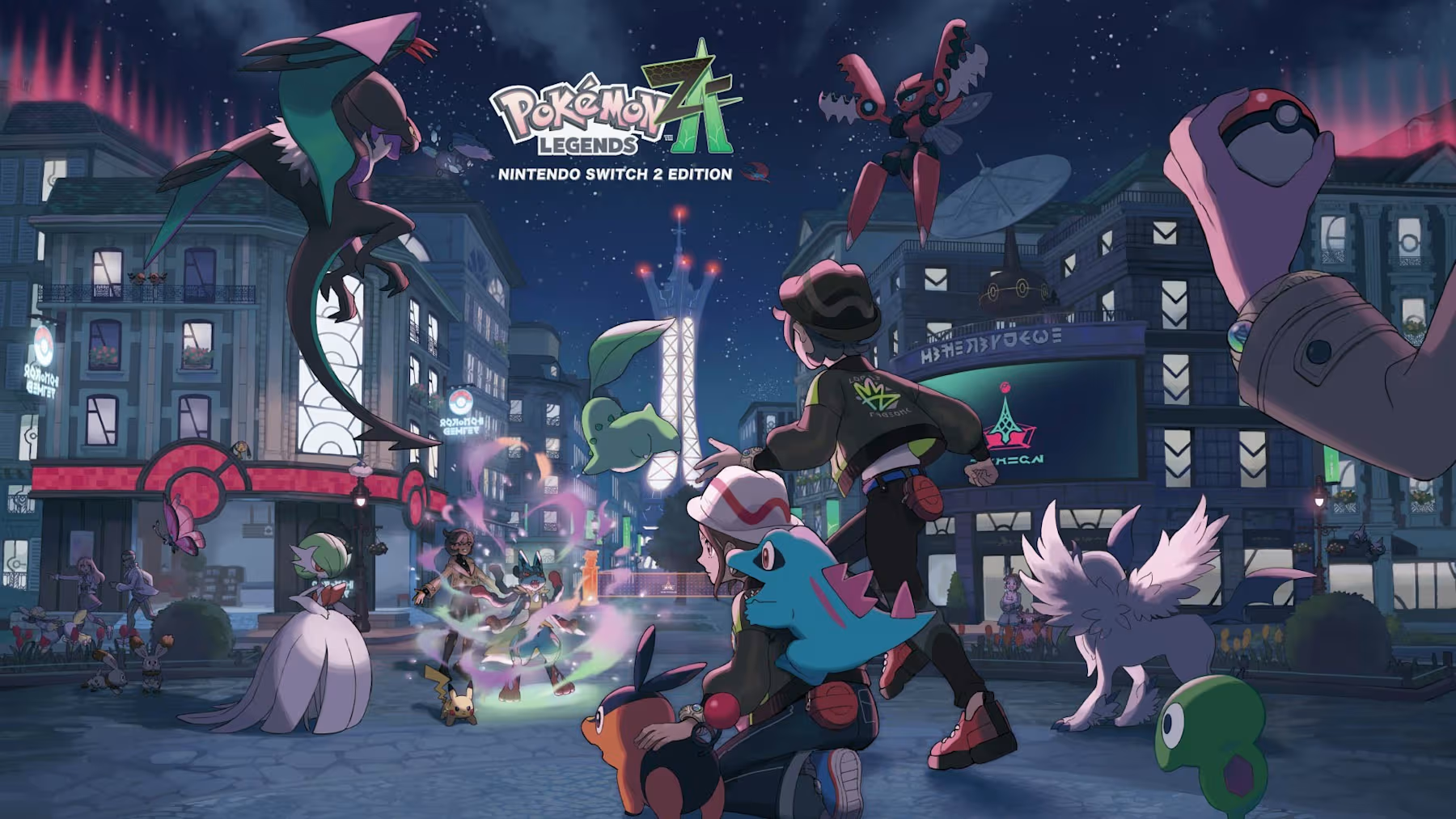
Pokémon Legends: Z-A arrives as one of the most daring mainline-adjacent Pokémon projects to date, pushing the series further into action-RPG territory while bringing fans back to the neon-lit heart of Kalos. With its real-time combat, urban exploration, and the triumphant return of Mega Evolution, Z-A signals that Game Freak is willing to experiment with formulas the franchise has clung to for decades. But with experimentation comes unevenness — and Z-A is no exception.
A Reimagined Lumiose City
Set during a large-scale redevelopment of Lumiose City, Z-A drops players into a region that feels both familiar and intriguingly reinterpreted. The narrative centers on the ambitious reconstruction project, corporate intrigue, and a reawakening of long-dormant Kalos lore. It’s a refreshing use of one of Pokémon’s most beloved settings: a bustling metropolis rather than rolling countryside.
Lumiose’s “wild zones” — pockets of semi-urban wilderness carved into the city — serve as the game’s primary exploration spaces. They may not have the sweeping natural landscapes of Legends: Arceus, but they deliver a fresh aesthetic that blends concrete and nature in interesting ways.
Real-Time Battles Shake Up the Formula
The boldest departure from tradition is Z-A’s real-time combat system. Encounters play out dynamically: both trainer and Pokémon move simultaneously, dodging attacks, positioning for clean hits, and choosing moves with timing in mind. It’s more fluid and engaging than traditional turn-based battles, and it gives Mega Evolution new tactical weight thanks to its time-limited “Mega Gauge.”
The system isn’t perfect — animations can feel stiff and visual feedback sometimes lacks clarity — but the core loop is exciting in a way Pokémon battles rarely are.
Mega Evolution Returns — And It Matters Again
Mega Evolution’s comeback is one of the game’s standout features. Instead of serving as a once-per-battle power-up, the new Mega system is tied to an energy gauge, allowing for more strategic use. Players must decide when to unleash their boosted form and when to conserve power. It’s a smart modernization that respects the mechanic’s roots while fitting the new battle paradigm.
The Z-A Royale: Competition With Style
A major addition is the Z-A Royale, a nighttime competitive mode where trainers battle to rank up from Class Z to Class A. This serves as both a gameplay challenge and a narrative thread, creating a sense of identity within Lumiose’s trainer culture. Add to this the new 4-player online battles — chaotic, fast-paced real-time skirmishes — and Z-A arguably offers the most robust competitive suite in any Legends title to date.
A Story That Resonates—Mostly
Z-A’s narrative leans more heavily into character-driven storytelling than previous Pokémon action titles, with emotional nods to Kalos’s past and its iconic figure, AZ. The plot builds to a dramatic final act that many players have praised as one of the most ambitious climaxes in the franchise.
Character writing still leans toward Pokémon’s traditionally wholesome tone, but the themes of renewal, responsibility, and urban coexistence give it surprising depth.
Where the Game Stumbles
For all its ambition, Z-A isn’t free from missteps:
- Visual inconsistencies — Flat textures, repetitive city assets, and occasionally lifeless NPC behavior can undermine the vibrant world the game aims for.
- No voice acting — Major story moments still unfold in silence, which feels increasingly outdated for a cinematic RPG.
- Stealth mechanics feel underdeveloped, with awkward enemy detection and stiff movement.
- Technical limitations on base Switch models, including frame dips and rougher environmental detail.
- Traditional features like Abilities or broad Pokémon transfers are limited, which may frustrate competitive purists.
These issues don’t break the experience, but they hold it back from reaching its full potential.
A Divisive Reception
Critics have generally praised Z-A for its creativity and combat system, while some players have been more mixed. The game’s user ratings are notably polarized — a sign that breaking the mold can alienate long-time fans even as it excites others. If you’re expecting a classic mainline Pokémon structure, Z-A may feel offbeat; if you’re open to change, it can be refreshing.
Verdict: A Brave Step Forward
Pokémon Legends: Z-A is bold, inventive, and imperfect — an evolution rather than a revolution. It successfully pushes Pokémon into more action-forward territory, revitalizes Mega Evolution, and reimagines Kalos with style. Yet it also carries the rough edges and growing pains of a series still figuring out how far it can stretch.
If you enjoyed Legends: Arceus or crave innovation in the Pokémon formula, Z-A is one of the most exciting entries in years. Traditionalists may find themselves wishing for the comfort of turn-based battles and fuller competitive systems, but for many fans, this will be a memorable, risk-taking chapter in the franchise.








Leave a Reply