


Peruvian cooking understands that contrast is not a problem to solve. It is often the point.
Ceviche finds its character between raw fish and sharp citrus. Ají brings heat without erasing the ingredient beneath it. Across the Andes, altitude can transform what grows, how people cook, and what eventually reaches the table.
The same principle runs through the story of Flow.
The restaurant brings together Peru and the Philippines, memory and research, creative ambition and kitchen discipline. At the center is Chef Kevin Uy, an Enderun Colleges alumnus whose years of international training became the foundation for a restaurant of his own.
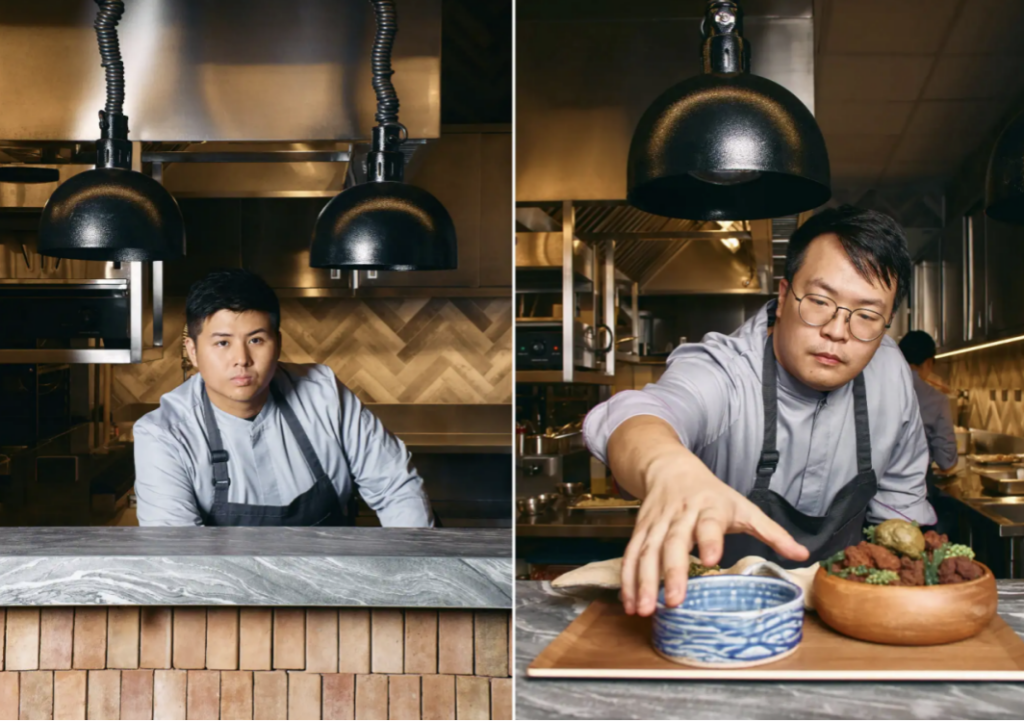
Supporting his vision is Chef Gabriel “Gato” Ong, Kevin’s childhood friend and fellow Enderun graduate. Their team also includes Enderun Culinary Arts alumni Sous Chef Betina Carangan and Chef de Partie Patricia Bautista.
Like a well-built Peruvian dish, Flow works because each element has a role. Kevin establishes the direction. Gato helps make it operational. The kitchen team turns the concept into something guests can experience, one course at a time.
The Long Way to Flow
Before Flow became a restaurant in Makati, it existed as a collection of lessons gathered across Barcelona, Peru, and Manila.
Kevin Uy graduated from Enderun Colleges in 2016 with a degree in BS International Hospitality Management, specializing in Culinary Arts. While still a student, he completed a six-month internship at Hotel Arts Barcelona, a Ritz-Carlton property in Spain.
He rotated through Bites, banquets, cold kitchens, and Enoteca. The latter, now known as Enoteca Paco Pérez, is the hotel’s two-Michelin-starred restaurant.
Kevin’s internship report captures a young cook adjusting to the demands of a professional kitchen. Hotel Arts expected organization, timing, speed, and quality. Stations had to remain clean. Preparation had to support the pace of service. One person’s delay could affect everyone else.
Kevin admitted that he arrived with a disorganized working style. Over time, he learned that speed did not come from rushing. It came from knowing where everything belonged and preparing before pressure arrived.
The experience also changed how he understood teamwork. Hotel Arts encouraged interns to ask for help when necessary. The kitchen did not need one person trying to save every service. It needed cooks who could communicate, accept correction, and work toward the same result.
Barcelona taught Kevin how a professional kitchen operates. Peru later gave him a clearer reason to cook.
He spent five years working with the group behind Central, Mil, and Mater Iniciativa under chefs Virgilio Martínez and Pía León. Central would later be named The World’s Best Restaurant in 2023 by The World’s 50 Best Restaurants.
In Peru, Kevin entered a culinary culture shaped by coastlines, forests, valleys, cities, and high-altitude communities. He learned to examine ingredients through the environments and people connected to them.
The question was no longer limited to what a cook could make from an ingredient. Kevin began asking where it came from, who produced it, and what cultural meaning it carried before reaching the kitchen.
This way of thinking helped him recognize parallels with the Philippines. Both countries possess distinct regional food traditions shaped by geography, trade, migration, and colonization. Their cuisines are not the same, but their histories create meaningful points of connection.
Kevin began to see food as more than a demonstration of technique. A dish could also communicate place, identity, and memory.
The pandemic interrupted his work in Peru and brought him back to Manila. During this period, he created Viaje by Kev, an online concept that introduced local diners to his approach to Peruvian food.
Yet Kevin did not treat his unexpected return as the end of his training. When travel became possible again, he went back to Peru and resumed his work at Central.
He eventually returned to the Philippines with more than recipes or techniques. Barcelona had given him discipline. Peru had given that discipline a cultural direction. Manila gave him the opportunity to turn both into a restaurant of his own.
That restaurant became Flow.
Kevin’s Vision Finds Its Operator
Opening a restaurant requires a different set of skills from developing a dish.
An idea must survive sourcing limitations, preparation schedules, staffing concerns, service demands, and the need for consistency. A concept can be thoughtful, but it still has to function on an ordinary Tuesday evening.
Kevin turned to Gabriel “Gato” Ong for this part of the work.
Gato graduated alongside Kevin in 2016 from Enderun’s BS International Hospitality Management program, specializing in Culinary Arts. The two had known each other since childhood before becoming classmates at Enderun.
After graduation, Gato developed his career in established restaurant groups across Asia.
He worked at Alain Ducasse at Morpheus in Macau and Amber at The Landmark Mandarin Oriental in Hong Kong. The restaurants held two and three Michelin stars, respectively, during the periods associated with his experience.
Gato later returned to the Philippines and became head chef at Tasteless Food Group Manila.
At Flow, he supports Kevin’s creative direction through his understanding of kitchen operations and execution. His experience helps translate culinary ideas into systems the team can reproduce throughout service.
Kevin is the restaurant’s creator and lead culinary voice. Gato provides the structure needed to bring that vision to the dining room.
Their relationship works because support does not mean imitation. Gato does not need to think exactly like Kevin. His value comes from understanding the vision well enough to test it, organize it, and help the kitchen deliver it consistently.
The Enderun Alumni Behind the Pass
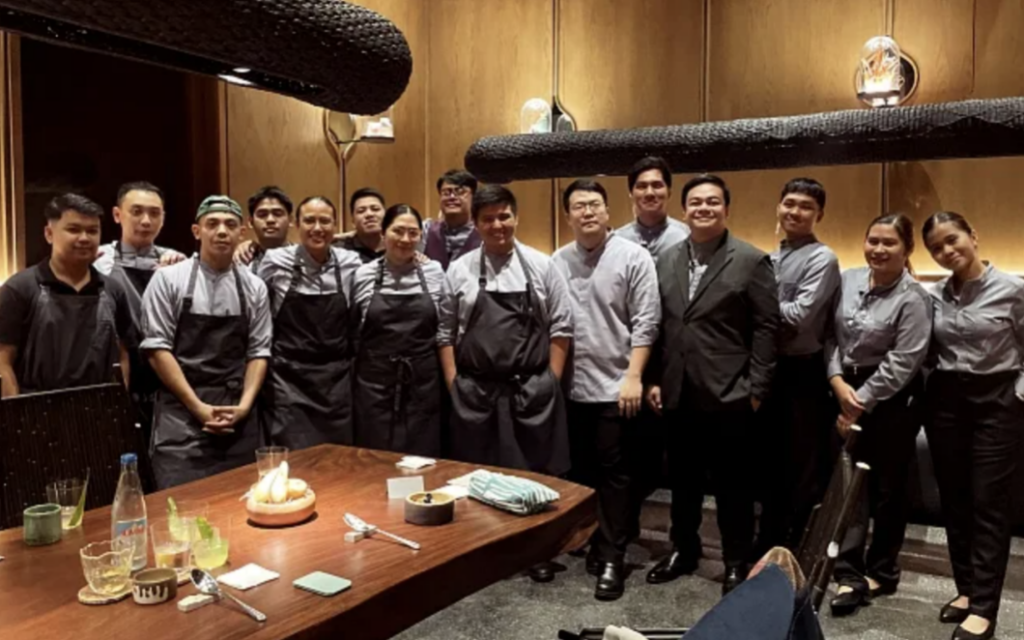
Flow’s Enderun connection extends beyond its two co-executive chefs.
Sous Chef Betina Carangan completed Enderun’s BS International Hospitality Management program, specializing in Culinary Arts, in 2017. Chef de Partie Patricia Bautista graduated from the same program in 2015.
Their positions place them within the daily execution of the restaurant.
As sous chef, Betina helps coordinate kitchen production, preparation, and service. Patricia manages the responsibilities assigned to her section as chef de partie.
These roles matter because a tasting menu involves more than arranging attractive food on distinctive tableware. Each course can require several components prepared through different techniques and brought together at a precise moment.
The kitchen must repeat that process for every guest while maintaining the same standard.
Kevin may create the restaurant’s central narrative, but the team gives that narrative consistency. Ideas become dishes only when people can execute them together.
Flow Between the Philippines and Peru
Located at Green Sun Hotel in Makati, Flow explores the environments and culinary cultures of Peru and the Philippines.
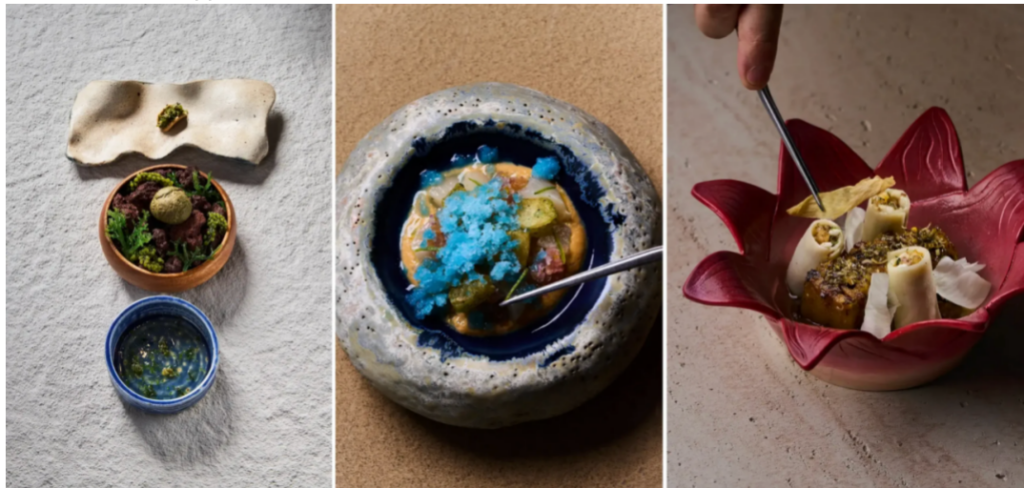
The restaurant describes its dishes through the idea of culinary biomes. Rather than organizing the menu around a single luxury ingredient, it considers how ingredients exist within larger environments.
A coastline contains more than seafood. A mountain contains more than what grows at its highest point. Farms, rivers, forests, and cities all produce distinct relationships among people, ingredients, and cooking practices.
This perspective draws from Kevin’s experience in Peru, but Flow applies it to the restaurant’s Philippine setting.
Its work involves local ingredients, Filipino producers, Philippine artisans, and a Manila-based kitchen. The goal is not to transport a Peruvian restaurant into Makati. It is to examine what Kevin learned abroad through the materials and experiences available at home.
Flow’s latest degustation returns more directly to his memories of Peru. The menu revisits the places, flavors, and ideas that shaped him, then interprets them through the restaurant he has created in the Philippines.
Memory provides the reference. The present determines the final form.
What Culinary Students Can Learn From Flow
Kevin’s career did not travel in a straight line.
It moved from Enderun to Barcelona, continued through further study and work abroad, reached Peru, returned to Manila during the pandemic, went back to Peru, and eventually settled into a restaurant in Makati.
Gato followed another route through Macau, Hong Kong, and the Philippine restaurant industry. Betina and Patricia developed their own professional experience before joining the Flow team.
Their careers met inside one restaurant, but no two journeys were the same.
For culinary students, this is more useful than a simple story of success.
Your first internship may not reveal the exact restaurant you will eventually create. It may teach you how to organize a station, receive criticism, and work beside people with different personalities.
Your first position after graduation may show you what kind of kitchen suits you. Working abroad may challenge assumptions you did not realize you carried. Returning home may require you to reconsider how international experience applies to local realities.
Education begins the process. Experience complicates it. Time gives it direction.
A Restaurant That Could Only Be Built After Returning Home
Flow is sometimes described as a meeting of Peru and the Philippines. That description is accurate, but incomplete.
The restaurant is also a meeting of different stages in Kevin’s life.
The discipline he developed in Barcelona appears in the organization required by the kitchen. The cultural perspective he gained in Peru shapes how he approaches ingredients. His return to Manila gives those ideas a new setting. Gato supplies the operational support needed to sustain them. Betina, Patricia, and the wider team carry the work through each service.
Peruvian cuisine taught Kevin that contrast could create identity.
At Flow, the contrasts continue. Research meets appetite. Memory meets local produce. One chef’s vision meets the discipline of an entire team.
The result is not Peru recreated in Makati.
It is what happened when an Enderun alumnus returned home with a clearer idea of what he wanted to cook, why he wanted to cook it, and who he trusted to help him create it.



Leave a Reply